
01. Operational Scope Integrity During Field-to-Desk Transfer Why informal jobsite handoffs lead to claim disputes and audit friction
In modern restoration management, discrepancies frequently emerge when emergency service crews hand off an evolving jobsite to office-based desk estimators. Field technicians observe actual water migration, subfloor degradation, and partial drywall cuts directly at the physical boundary. Yet when transmitting these findings, reliance on informal phone calls or disorganized messaging threads creates documentation blind spots that carrier auditing algorithms immediately flag.
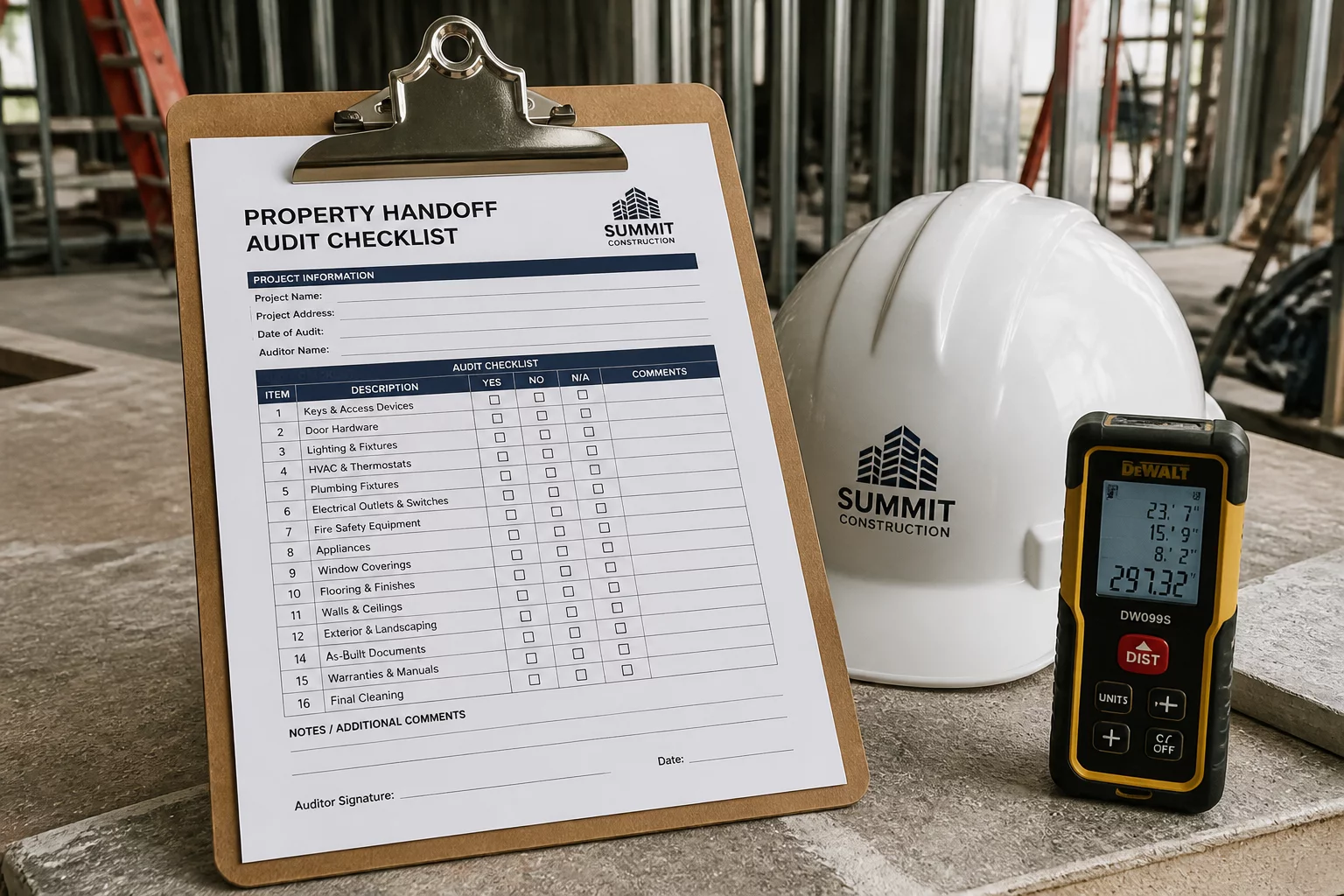
The Handoff and Transition Audit Register resolves this communication gap by establishing a disciplined ledger format. Every physical room transition, moisture boundary extension, and structural discovery receives an explicit digital paper trail before the office estimator enters line items into Xactimate, Symbility, or CoreLogic estimating engines.
Download Scope Clarification Format
Ensure all line changes conform with standard desk review protocols.
02. Core Architecture of the Transition Audit Register Key data parameters required for defensible carrier reviews
A functional transition register does not simply duplicate generic job notes. It operates as a chronological reconciliation ledger that indexes field data points against planned software entries. When field estimators document selective demolition expansion, the register records the initial estimate figure, the observed field adjustment, the specific photographic proof anchor, and the operational justification for the delta.
-
1
Photo Anchor Indexing: Every modified quantity or added trade operation ties directly to a numbered, timestamped jobsite photograph.
-
2
Discrepancy Variance Thresholds: Discrepancies exceeding 10% in linear or square footage trigger an immediate mandatory secondary field sign-off.
-
3
Structural Boundary Notation: Demolition boundary transitions must document wall framing cavity status before subfloor or drywall allowances change.
-
4
Carrier Coding Concordance: Field items must translate directly into recognized Xactimate price list codes without vague miscellaneous descriptions.
“When a field tech tells an estimator one thing over the phone and sends raw photos without context, the revision is rejected within 48 hours. The audit register ensures every single scope modification carries immediate evidentiary proof.”
03. Reconciling Ambiguity Before Initial Carrier Submission Transforming conversational field notes into audit-proof line items
Field technicians often describe damage using colloquial contractor terms: "took out extra baseboard," "drywall was soaked behind the vanity," or "had to cut two feet higher." When desk estimators insert these adjustments directly into an estimate revision without systematic categorization, file reviewers view the changes as unverified contractor scope expansion.
By routing all field observations through the REG-03 register template, technicians convert ambiguous statements into quantifiable units. Moisture penetration thresholds, stud cavity microbial checks, and code-mandated electrical disconnections receive specific line designations. Consequently, carrier audit personnel encounter an organized transition summary that matches Xactimate sketch boundaries to the millimeter.