01. Trade Overlap Vulnerabilities Deconstructing Shared Wall Openings and Multi-Subcontractor Workflows
When water damage mitigation or pipe burst remediation exposes multi-layer wall framing, estimators routinely encounter overlapping line entries submitted by separate specialty trades. A licensed plumber might bill for drywall removal to access a copper riser, while the water restoration crew simultaneously logs flood cuts in the identical wall cavity. Without a standardized cross-trade tracking protocol, these concurrent operations trigger desk review rejections for redundant demolition allowances.
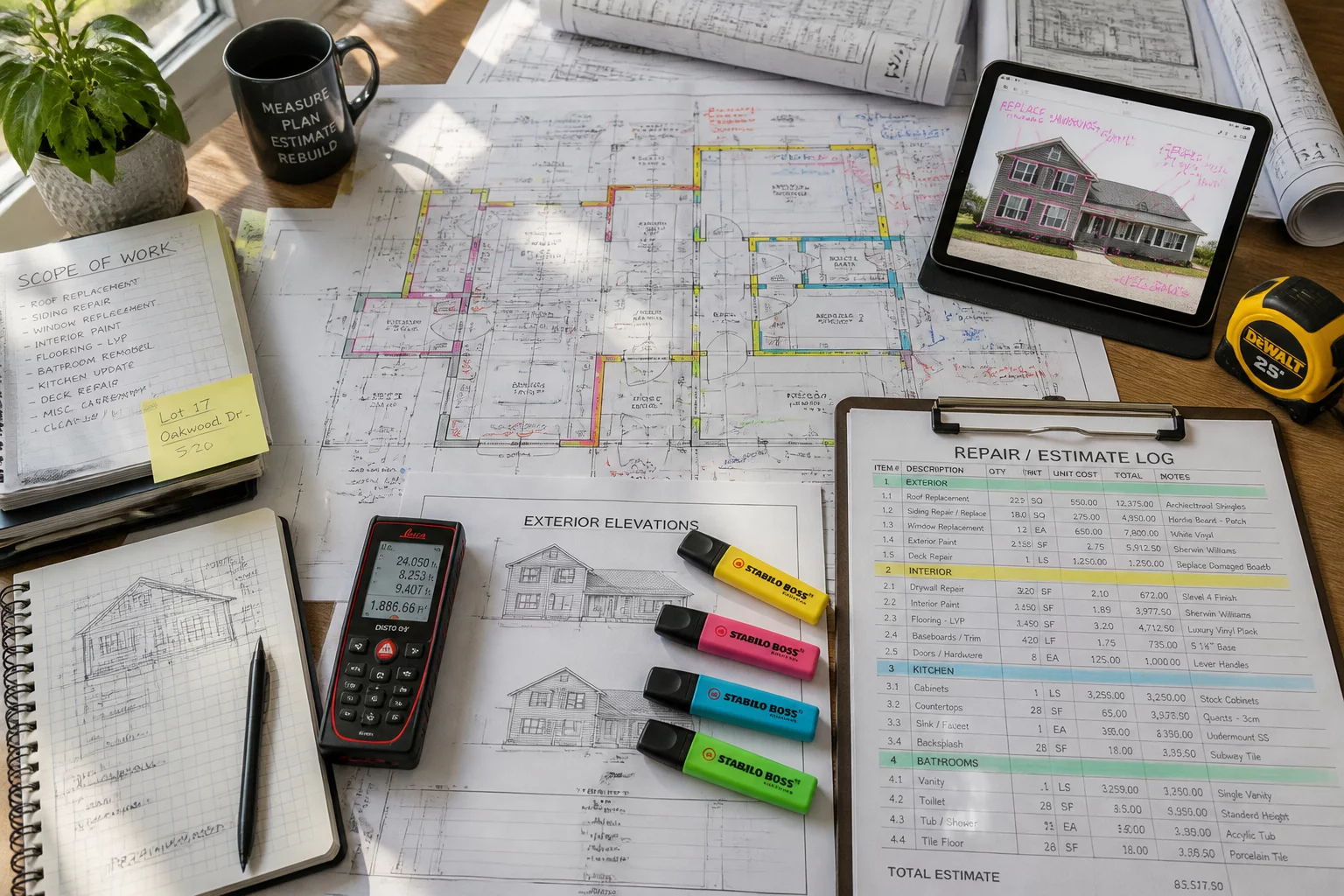
The Cross-Trade Scope Reconciliation Log (Format LOG-05) organizes items by primary operational driver rather than isolated subcontractor invoices. Each entry maps directly to physical building boundaries, ensuring that framing cut-backs, electrical isolations, and finish surface repairs remain strictly attributed to their proper trade category. This clarity prevents duplicate unit charges while preserving justified line costs during carrier audits.
Download Scope Clarification Format
Ensure all line changes conform with standard desk review protocols.
02. The LOG-05 Reconciliation Framework Standard Operating Fields for Mechanical and Architectural Alignment
Applying the LOG-05 framework requires reviewers to audit physical transition points where rough mechanical, electrical, and plumbing assemblies interface with architectural finishes. Every item under review is verified against four structured documentation benchmarks to ensure sequential accuracy and clear ownership across subcontractors.
-
1
Primary Trade Assignment: Designate a single trade for wall and ceiling openings to prevent secondary trades from billing concurrent access demolition in the same cavity.
-
2
Shared Containment Allocation: Distribute containment barriers, floor protection, and HEPA air scrubbing costs across all trades working within the containment zone rather than duplicating setup fees.
-
3
Penetration Patch Verification: Compare spot repairs from plumbing or electrical pass-throughs against full-room drywall square footage allowances to preclude double-charging surface repairs.
-
4
Finish Line Harmonization: Coordinate baseboard, casing, and fixture detaches with rough mechanical schedules, ensuring trim removal occurs once under the proper finishing code.
“A revision is not merely about adjusting unit costs; it is about proving that two trades did not bill for tearing open the exact same square foot of wallboard.”
03. Pre-Submission Audit Verification Preventing Carrier Stalls Through Cross-Referenced Line Lineage
Desk review algorithms automatically flag files when identical room locations display entries for mechanical access cuts, electrical isolation runs, and general selective demolition. Automated systems treat these overlaps as duplicate line items and issue blanket reductions. Submitting the LOG-05 reconciliation matrix demonstrates that each trade performed distinct physical work at separate stages of the restoration cycle.
The file estimator attaches timestamped photos corresponding to each log line. By proving that the drywall contractor repaired the opening only after mechanical pressure tests concluded, the file provides unmistakable proof of sequential repair. This level of cross-trade discipline expedites file approval and reinforces trust between restoration contractors and carrier auditors.